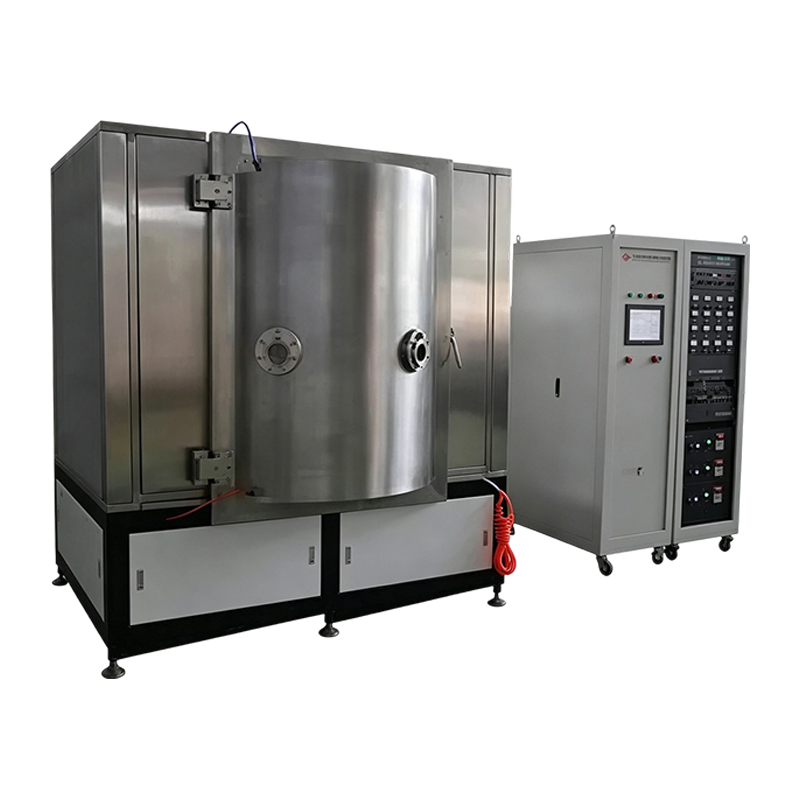
Two quotations for the same mid-size magnetron sputtering tool used in physical vapor deposition (PVD) coating can differ by more than $20,000, and the gap usually sits in the pump package. One supplier proposes a two-stage oil-sealed rotary vane backed by a Roots booster; the other specifies a dry screw pump with a nitrogen purge. Both will pull the chamber down. Only one still looks affordable in year three, and which one depends on your process chemistry and duty cycle. This guide explains how to choose a vacuum pump for a PVD coating system with real numbers instead of brochure claims.
Content
The backing pump decides both your cycle time and your contamination ceiling, because every molecule entering or leaving the chamber passes through it. It does two jobs: roughing the chamber from atmosphere down to about 0.05 to 0.1 mbar, where the turbomolecular or diffusion pump takes over, then backing that high-vacuum pump continuously during deposition while it handles the argon, nitrogen, acetylene or oxygen gas load plus debris returning from the targets.
Backing pump (fore pump): the mechanical pump that roughs the coating chamber from atmosphere and then maintains the exhaust of the high-vacuum pump, allowing the chamber to reach a base pressure of roughly 0.0001 to 0.00001 mbar before the plasma is ignited.
Contamination risk concentrates in one pressure window. Between about 1 and 0.01 mbar, an oil-sealed pump is at its worst for hydrocarbon backstreaming: oil vapor migrates against the gas flow toward the chamber. The damage rarely shows at pump-down; it shows at batch end as hazy decorative finishes, gray tool coatings or failed adhesion tests.
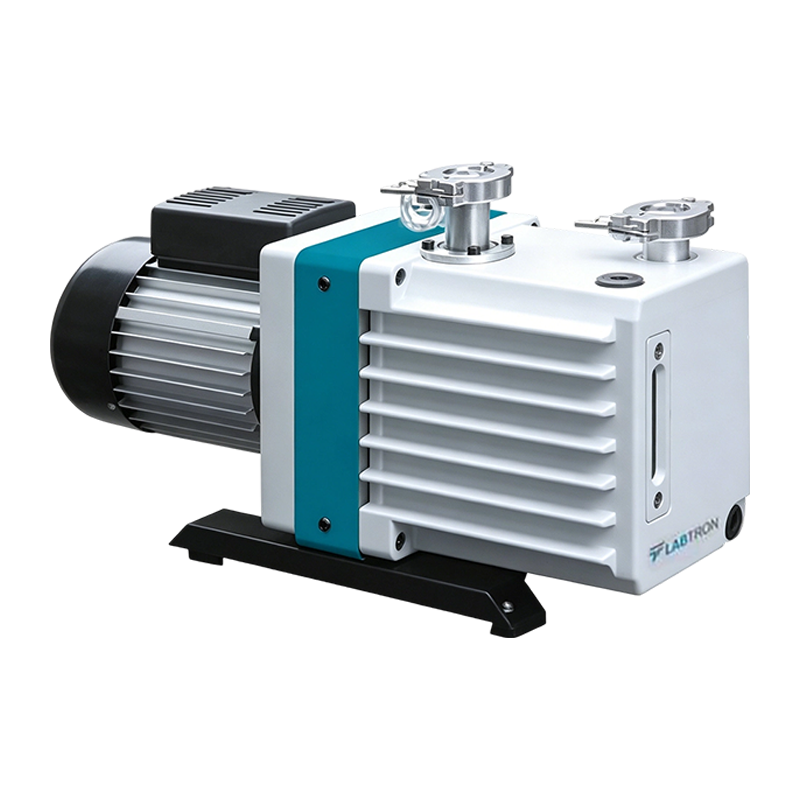
For decorative PVD and any budget-limited installation, a two-stage oil-sealed rotary vane remains the most cost-effective backing pump available, provided the oil is managed as a consumable. A 100 m3/h two-stage unit costs a fraction of a dry screw pump of similar speed, rebuilds with inexpensive vane and gasket kits, and has service support in nearly every industrial region. Ultimate pressure sits near 0.002 mbar with the gas ballast closed, and near 0.05 mbar with the ballast open to handle water vapor.
The weakness is the oil itself. Sputtered metal powder and reactive byproducts turn oil into sludge, so under coating duty you should plan oil and filter changes every 1,000 to 2,000 running hours rather than the 4,000 to 8,000 hours quoted for clean service. Each change costs 30 to 60 minutes of downtime.
Dry pumps cost roughly two to four times as much up front and draw more power, but they remove oil contamination as a failure mode and tolerate the dirtiest process streams. A modern dry screw pump reaches an ultimate pressure of 0.005 to 0.01 mbar with speeds from 100 to 750 m3/h, while claw pumps sit near 0.02 to 0.05 mbar in a compact frame. A continuous nitrogen purge keeps soot and condensables moving to exhaust instead of settling inside the mechanism.
That purge is why dry screws are the default on diamond-like carbon (DLC) and Ta-C lines, where acetylene chemistry produces soot that would polymerize pump oil within weeks. The trade-offs are real: surface temperatures of 70 to 90 C, noise around 75 to 85 dBA, a power draw 30 to 50 percent higher than an oil-sealed unit of similar speed, and gear-end rebuilds at 20,000 to 30,000 hours.
A dry pump does not make the process cleaner. It stops the pump from making the coating dirtier.
Size the pump for your worst processing hour, not the best-case datasheet. The five steps below take about an hour with a chamber drawing and your process recipe.
Over a five-year horizon, consumables and downtime decide which pump is cheaper, not the purchase price. The table gathers the figures that matter at purchase time.
| Configuration | Speed range | Ultimate pressure | Relative capex | Main maintenance item |
| Two-stage oil-sealed vane | 25-100 m3/h | About 0.002 mbar | 1x | Oil and filter changes every 1,000-2,000 h |
| Vane + Roots booster | 300-1,000 m3/h | About 0.002 mbar | 1.6-2x | Vane service plus booster bearing checks |
| Dry screw | 100-750 m3/h | 0.005-0.01 mbar | 2.5-4x | Purge filters and gear-end rebuild at 20,000-30,000 h |
| Dry screw + Roots | 600-1,200 m3/h | About 0.005 mbar | 3.5-5x | Combined service plus purge management |
For a single-chamber decorative line on one shift, the oil-sealed route wins on pure cash. For a multi-chamber tool coater on three shifts, the dry package often pays back its premium within 24 to 40 months through avoided oil service and fewer contamination rejects.
Let the process gas pick the pump; the same chamber can justify opposite answers depending on what runs inside it.
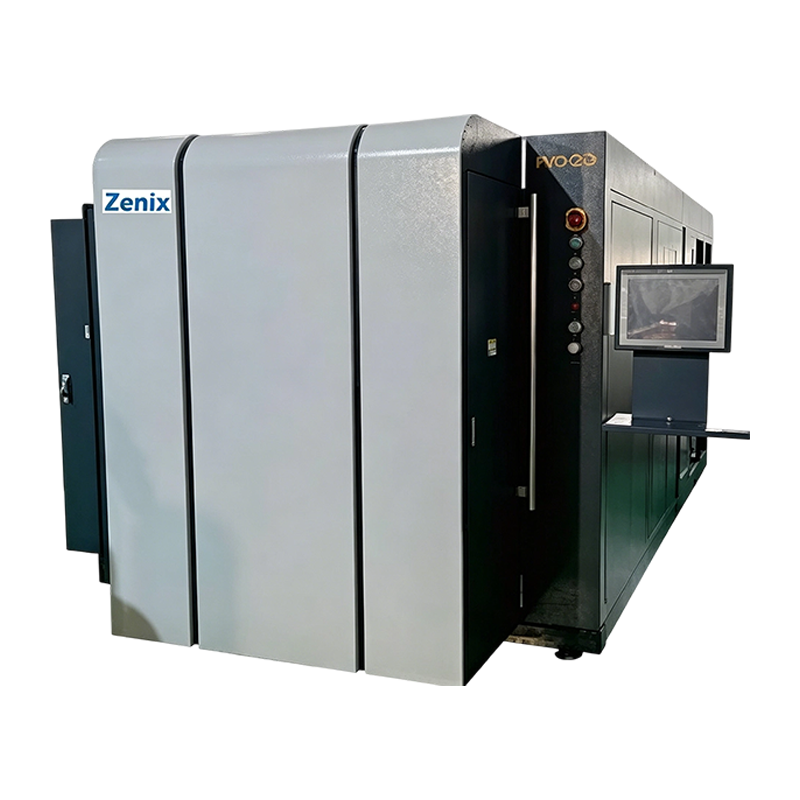
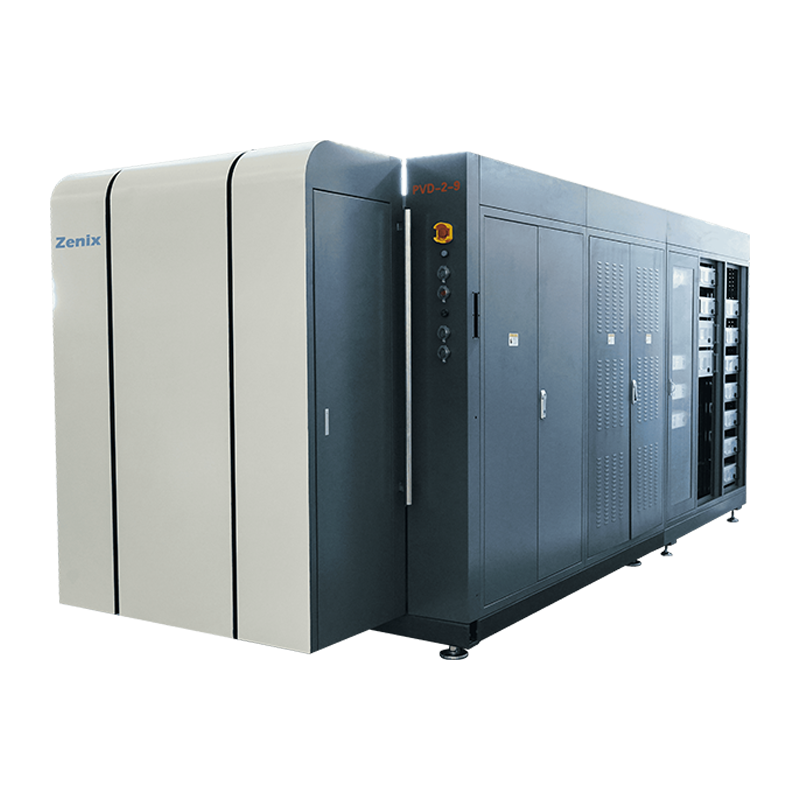
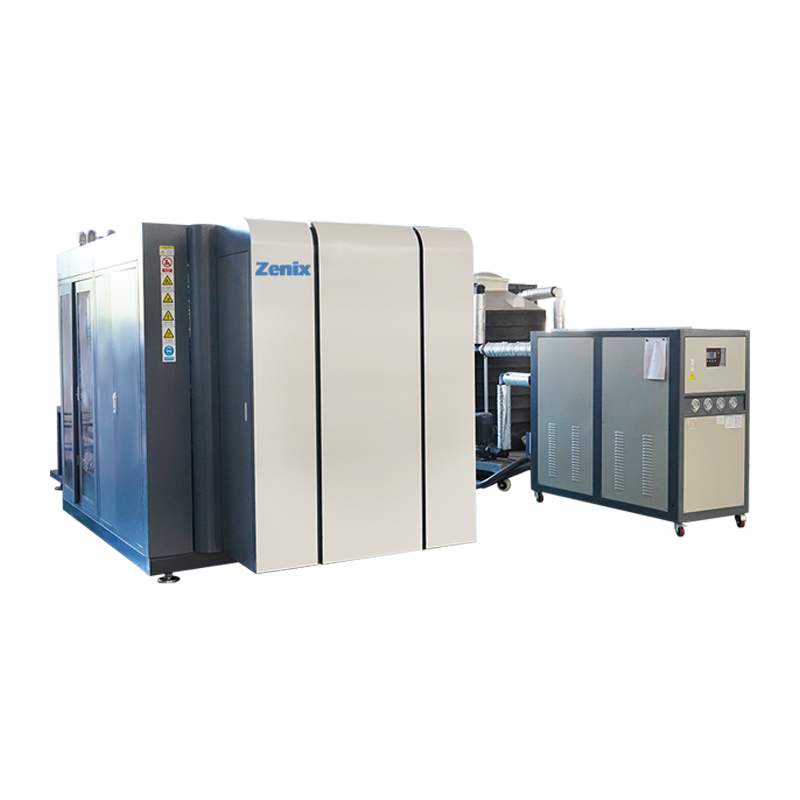
Shanghai Zenix Vacuum Coating Technology Co., Ltd. specifies matched pump packages for its hard, decorative and functional PVD coating systems, so this choice is part of the system quotation, not an afterthought.
Yes, and many decorative lines still do. Keep the gas ballast partly open during roughing, fit a zeolite trap and mist filter, cross over quickly through the 1 to 0.01 mbar window, and check the oil weekly. If the oil darkens within 200 hours, the process is telling you to go dry.
Plan an effective speed near 100 m3/h for a 3 to 5 minute roughing cycle plus steady backing of the turbomolecular pump. Add a Roots booster if you need sub-2-minute cycles or run high gas throughput during deposition.
No. They remove oil changes on the vacuum side but still need purge filter service, gearbox checks and a major rebuild at roughly 20,000 to 30,000 hours. The difference is that their maintenance schedule is predictable instead of process-dependent.
It becomes necessary when cycle time or gas throughput between 0.1 and 1 mbar dominates productivity, which is common on arc and high-rate reactive lines. For small decorative batch chambers, a two-stage vane alone is often sufficient.

Product Categories
PVD Hard Coating Machine Decorative PVD Coating Machine Evaporation Coating Machine Functional Coating Machine Used Coating Machine Vacuum Pumps Pretreatment MachineContact Us
[email protected]
+86-15921261676
Room 101, Building 4, Songgang Smart Valley, No. 1699 Songhua Road, Qingpu District, Shanghai, China