An uncoated carbide end mill cutting 42CrMo4 die steel typically reaches its wear limit after 20 to 30 minutes. Run the same tool through a TiAlN cycle in a PVD hard coating machine and flank wear usually arrives 3 to 5 times later. Injection molders see the same pattern: a gate insert that starts flashing glass-filled nylon parts at 60,000 shots can pass 200,000 shots once it carries a 2 micron chromium nitride film.
That difference does not come from luck. It comes from a vacuum process that rebuilds the working surface at the micron scale without changing tool geometry. This guide explains what the machine actually does, which wear mechanisms the film attacks, and how to judge whether the gains will hold in your production.
Content
A PVD hard coating machine grows a 1 to 4 micron ceramic film such as TiN, TiAlN, AlCrN or DLC onto cleaned tools and molds inside a vacuum chamber, at temperatures low enough to preserve heat-treated hardness and finished dimensions.
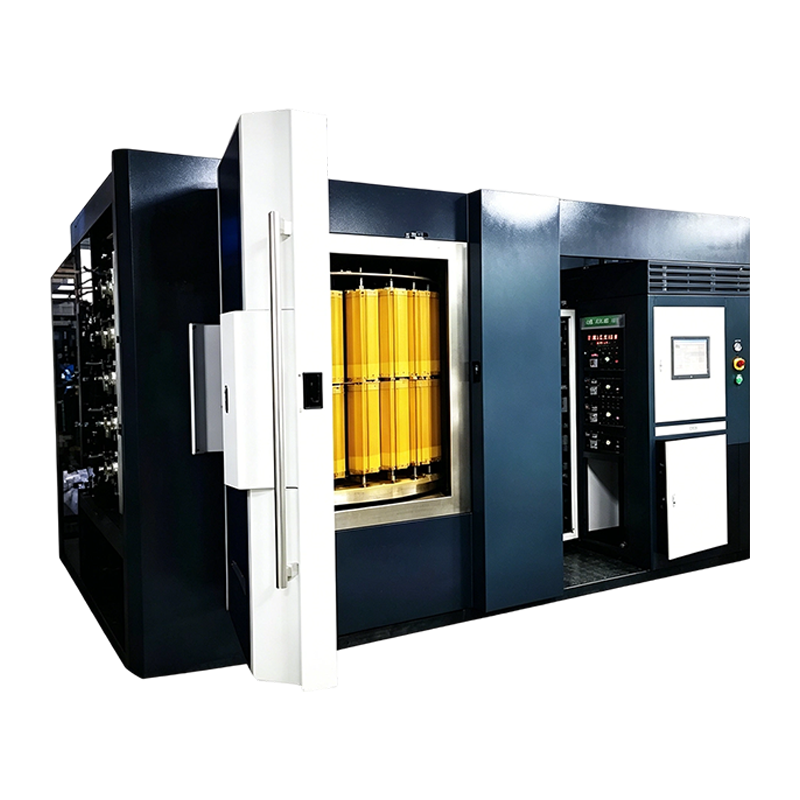
Physical Vapor Deposition (PVD) converts solid metal targets into ionized vapor and reacts that vapor with nitrogen or process gases on the workpiece surface. Cathodic arc sources deliver high ion energy and strong adhesion, while magnetron sputtering produces the smoother films valued on polished cavities. Before deposition, argon plasma etching strips the last oxide layers so the film bonds to chemically active steel or carbide. Because the film is microns thin and follows the surface profile, a polished cavity stays polished and a prepared edge keeps its geometry, with no regrinding or re-polishing after coating.
Physical Vapor Deposition is a vacuum coating process in which metal is evaporated or arc-ionized from a solid target and deposited atom by atom as a dense compound film, typically 1 to 4 microns thick, such as titanium nitride (TiN) or titanium aluminum nitride (TiAlN).
Coating selection follows the application:
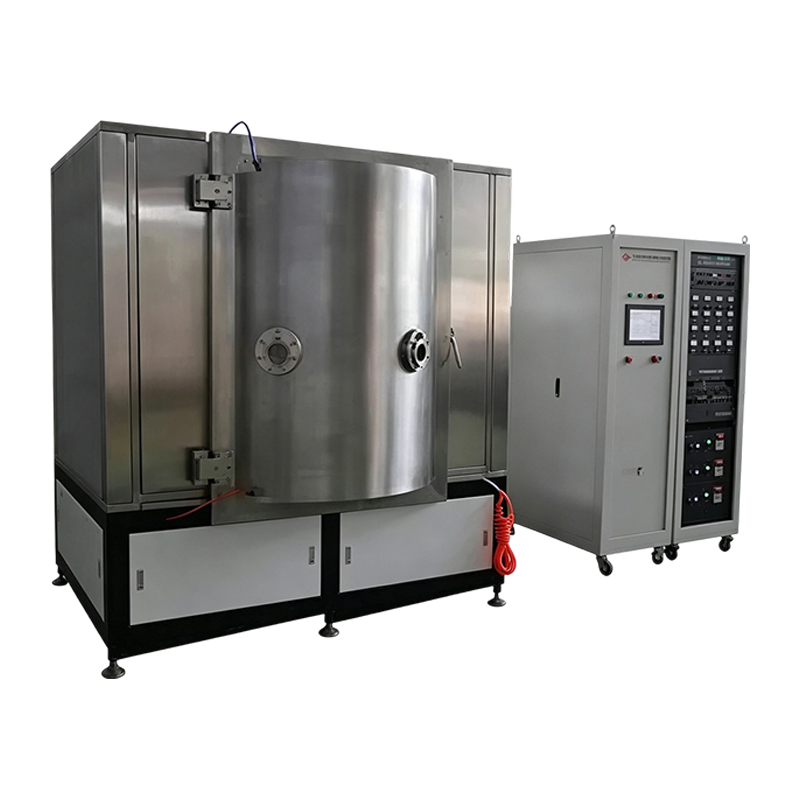
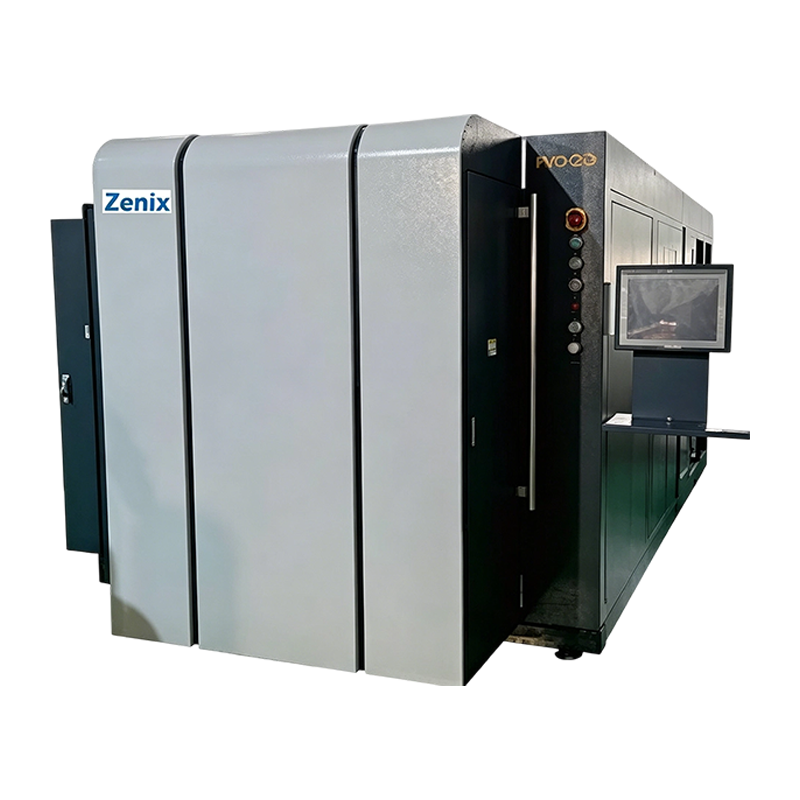
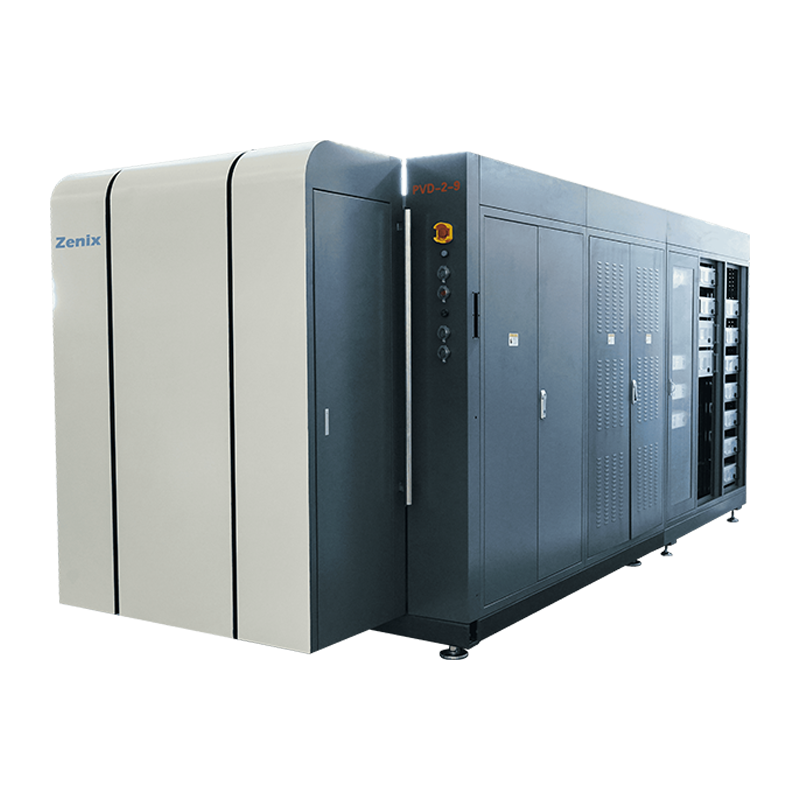
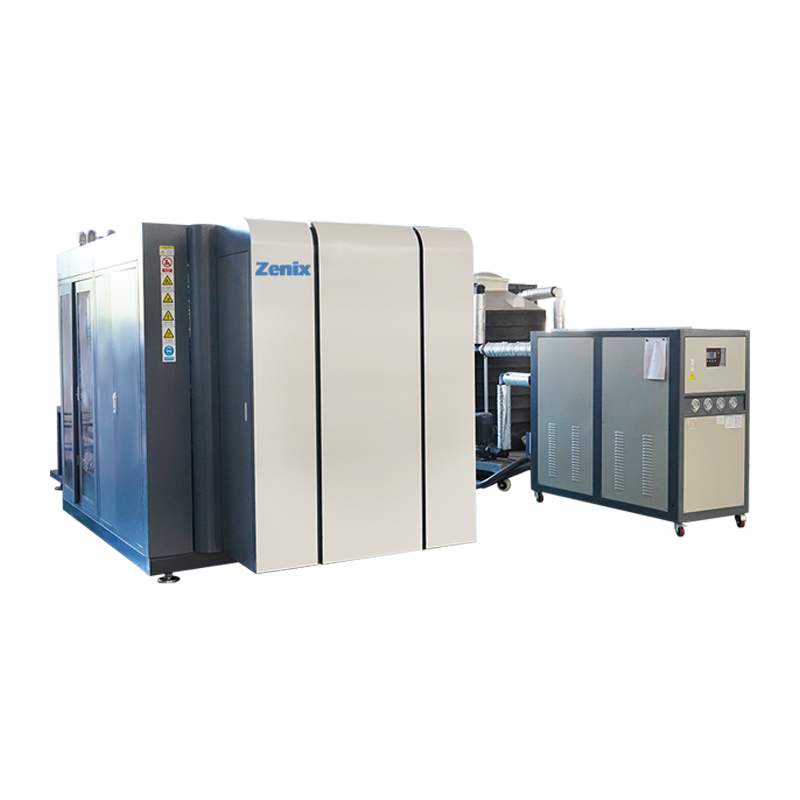
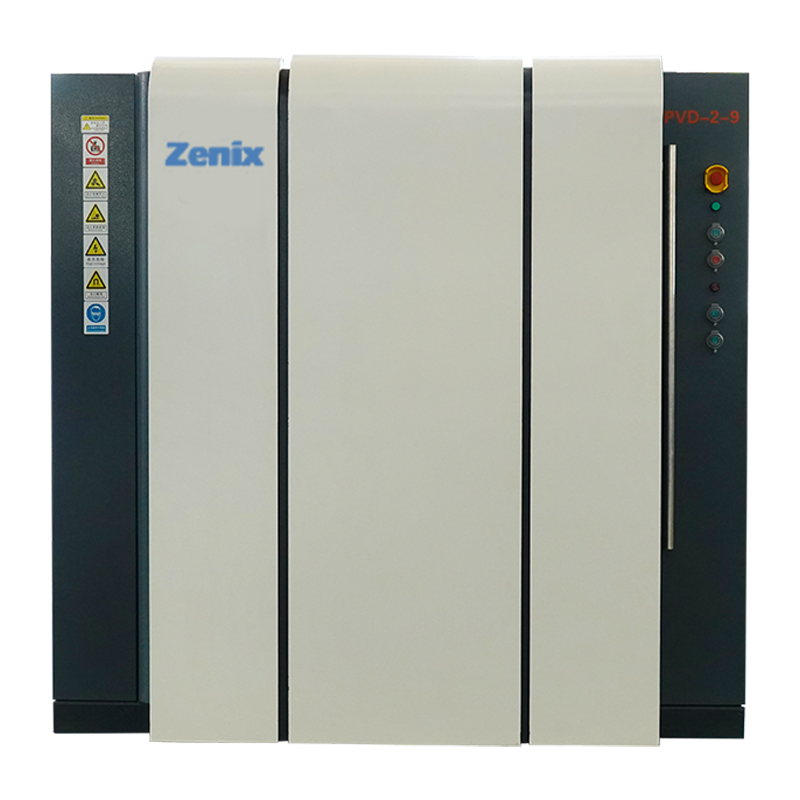
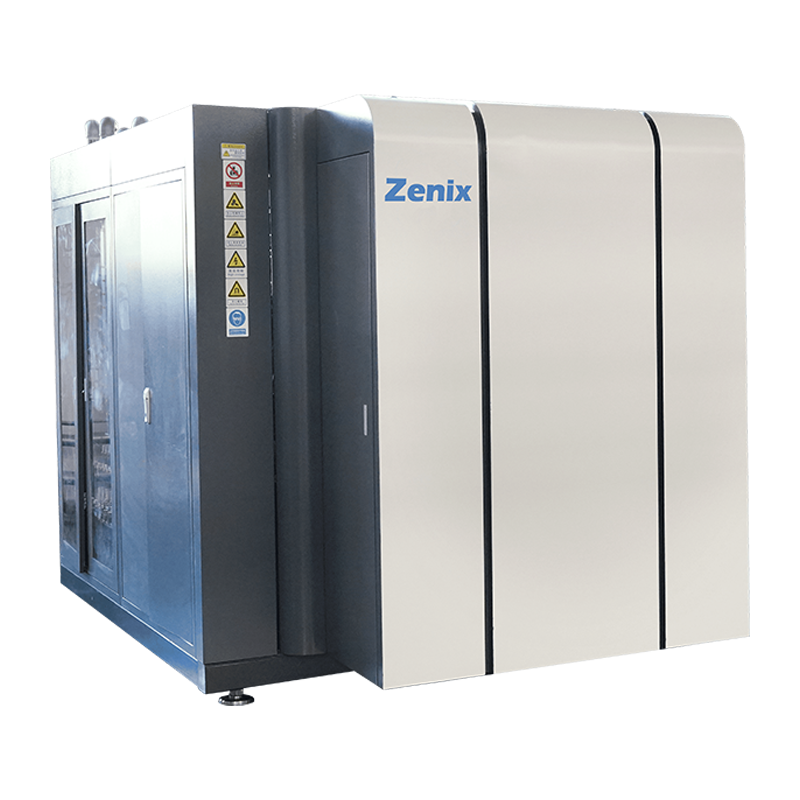
Suppliers package this as a complete line rather than a single chamber. Shanghai Zenix Vacuum Coating Technology Co., Ltd., a vacuum coating equipment manufacturer founded in 1985, pairs hard coating chambers with pretreatment machines, vacuum pumps and process support, and builds equipment for TiAlN, nanocomposite hard films, DLC and Ta-C production.
A PVD hard coating machine extends tool life because the film attacks four failure channels at once: hardness-driven abrasion, friction-driven adhesion, heat-driven oxidation and stress-driven chipping.
typical service life multiplication reported across drilling, milling and tapping when switching from uncoated to a correctly selected PVD film
Relative tool life index by coating type (uncoated carbide = 1x)
Indicative mid-range values for steel machining; actual gains depend on substrate, edge preparation and cutting parameters.
Cutting tools earn their gains at the cutting edge, while molds earn them on sliding and filling surfaces, so film choice, thickness and refresh strategy differ between the two applications.
| Aspect | Cutting tools | Molds and dies |
| Dominant wear mode | Flank and crater wear concentrated at the cutting edge | Scratching, galling and corrosion across cavities and gates |
| Common film families | TiAlN, AlCrN, nanocomposite multilayers | Chromium nitride (CrN), DLC, titanium carbonitride (TiCN) |
| Typical thickness | 1 to 3 microns | 2 to 4 microns |
| Expected life effect | 2 to 10 times edge life | 2 to 4 times between maintenance intervals |
| Refresh strategy | Strip and recoat after every regrind | Recoat during scheduled mold service |
Coating life depends as much on edge preparation, cleaning and temperature control as on the coating material itself, because a first-class film on a burnt or contaminated edge fails early.
Hone cutting edges to a 0.01 to 0.03 mm radius and bring mold surfaces to a low, uniform roughness; grinding burn must be removed before anything enters the chamber.
Ultrasonic washing removes coolant salts and particles, because residues that survive cleaning reappear as pinholes and local delamination.
Argon ion bombardment inside the chamber activates the surface and lifts film adhesion before deposition starts.
Arc or sputter sources run at 350 to 500 degrees Celsius for standard recipes, while low-temperature processes near 200 to 250 degrees Celsius protect steels tempered below 300 degrees Celsius.
Film thickness, adhesion and finish are verified before release, typically with calotest or ball-crater measurement and Rockwell-indent adhesion checks.
Cold-work steels such as D2 deserve special attention: their tempering temperatures sit near 200 degrees Celsius, so only a low-temperature PVD recipe avoids softening the cavity. Confirm this capability before buying a machine or booking a coating service, and check that pretreatment equipment and vacuum pump capacity are specified as part of the same line.
Recoating discipline matters just as much as the first run:
A coating machine pays for itself when coating cost per finished part is a small fraction of tool cost and the life gain is at least 2 times; below that threshold, the investment rarely closes.
One 12 mm TiAlN-coated end mill at USD 25 lasts 100 minutes after coating versus 25 minutes uncoated. Add three recoats at about USD 5 each and the same cutter body delivers roughly 400 coated minutes for USD 40 in total. Reaching 400 minutes uncoated needs 16 cutters at USD 25, or USD 400, plus 12 extra tool changes. Tool spend per machining hour falls by roughly 90 percent before any downtime savings are counted.
Treat these figures as planning inputs rather than promises. Log minutes per edge before and after your first coating trial, include machine downtime per tool change, and the decision becomes simple arithmetic instead of debate.
No. Films run 1 to 4 microns and follow the existing contour, so no post-machining is needed. On the sharpest edges the film can round the tip by a micron or two, which edge preparation is set to account for in advance.
Standard cathodic arc recipes run at 350 to 500 degrees Celsius, below the tempering range of most hot-work steels. Low-temperature processes near 200 to 250 degrees Celsius exist for cold-work steels and finished assemblies that cannot tolerate heat.
For one sharpening interval. The film wears together with the edge, so standard practice is to strip and recoat after each regrind, which restores full performance for the next cycle.
Yes, when molds run abrasive glass-filled polymers, corrosive PVC or sticky elastomers. Coated cavities and gates typically stretch maintenance intervals 2 to 4 times and release parts more cleanly, which also reduces polishing and repair labor.

Product Categories
PVD Hard Coating Machine Decorative PVD Coating Machine Evaporation Coating Machine Functional Coating Machine Used Coating Machine Vacuum Pumps Pretreatment MachineContact Us
[email protected]
+86-15921261676
Room 101, Building 4, Songgang Smart Valley, No. 1699 Songhua Road, Qingpu District, Shanghai, China