Vacuum Coating Technology Guide - PVD vs CVD
Choosing between PVD and CVD usually comes down to one number before any coating datasheet is opened: process temperature. A PVD line deposits TiAlN at 200-450 degrees C, while a thermal CVD furnace needs 850-1050 degrees C for a similar family of chemistry. If your parts are hardened high-speed steel, that gap alone settles the PVD vs CVD question, because everything above roughly 550 degrees C destroys the core hardness your heat treatment just paid for. Both Physical Vapor Deposition (PVD) and Chemical Vapor Deposition (CVD) are proven vacuum coating technologies that extend the life of tool steels, carbide, and decorative components, yet they reward different substrates, geometries, and batch sizes. This guide compares the two across temperature, coating performance, cost, and product fit, then closes with a five-step framework you can apply to a real production line.
Content
The fastest way to frame the PVD vs CVD choice is by how each process builds a film. PVD is a physical route: metal or ceramic targets are evaporated or sputtered inside a vacuum chamber, the vapor travels to the parts, and it condenses as a dense film. CVD is a chemical route: reactive gases flow over heated parts and react at the surface, growing the coating atom by atom. Temperature, thickness, adhesion, and edge behavior all follow from that physical-versus-chemical distinction.
Because PVD uses solid targets, it switches chemistry quickly: TiN, TiAlN, CrN, DLC, and Ta-C can run in the same or similar chambers, which is why most hard-coating, decorative, and functional coating equipment today is PVD-based. CVD changes chemistry more slowly but grows thicker, more uniform layers inside holes and complex shapes that line-of-sight PVD sources cannot fully reach.
Substrate temperature tolerance eliminates one technology for most product families before a single hardness value is compared. PVD processes run between roughly 200 and 450 degrees C, below the tempering temperature of most hardened tool steels, so coated drills, end mills, and dies keep their core hardness. Thermal CVD needs 850-1050 degrees C, which only sintered carbide and similar high-temperature substrates tolerate without damage. Many modern PVD systems also offer low-temperature recipes below 200 degrees C for cold-work steels tempered around 180-220 degrees C and for precision components that must not distort.
Distortion is the quieter cost. A CVD cycle at 1000 degrees C moves thin-walled or long components, and straightening after coating rarely pays for itself.
CVD wins on thickness and uniformity; PVD wins on edge sharpness, residual stress control, and coating flexibility. Neither result is universally better, because it depends on whether the part fails from wear volume or from a dulled edge.
| Attribute | PVD (Physical Vapor Deposition) | CVD (Chemical Vapor Deposition) |
| Deposition mechanism | Solid targets vaporized and condensed in vacuum | Gaseous precursors reacting on the heated surface |
| Typical thickness | 1-5 microns | 6-14 microns |
| Typical hardness | TiAlN around 3300 HV | TiC and TiN around 2300-3000 HV |
| Process temperature | 200-450 degrees C | 850-1050 degrees C |
| Edge condition | Preserves honed edges | Can round edges by 10-20 microns |
| Coverage | Strong on open, line-of-sight surfaces | Uniform inside blind holes and complex shapes |
| Interface | Ion-bombarded bond with compressive stress | Diffusion layer with metallurgical adhesion |
| Post-coating work | Minimal, parts leave ready to use | Post-grinding often required |
On the PVD side, carbon-based families extend the toolkit further: DLC coatings cut friction and fight galling on aluminum-facing tools and automotive components, while Ta-C reaches hardness levels suited to severe abrasive wear. Both options run in PVD or plasma-assisted hardware at temperatures most substrates accept.
Machine price is rarely the deciding line item. Masking, post-grinding, energy, and batch logistics dominate the cost per coated part, so model those before comparing quotations.
A PVD batch typically clears in a single shift, keeps floor-space and utility demands moderate, and lets mixed product families share one chamber. A CVD batch spends most of its cycle heating and cooling, and the high temperature complicates masking so much that many shops simply accept coating on surfaces they later grind. For decorative work such as faucets, hardware, and watch components, PVD is effectively the default because color control, finish quality, and cycle time all favor it.
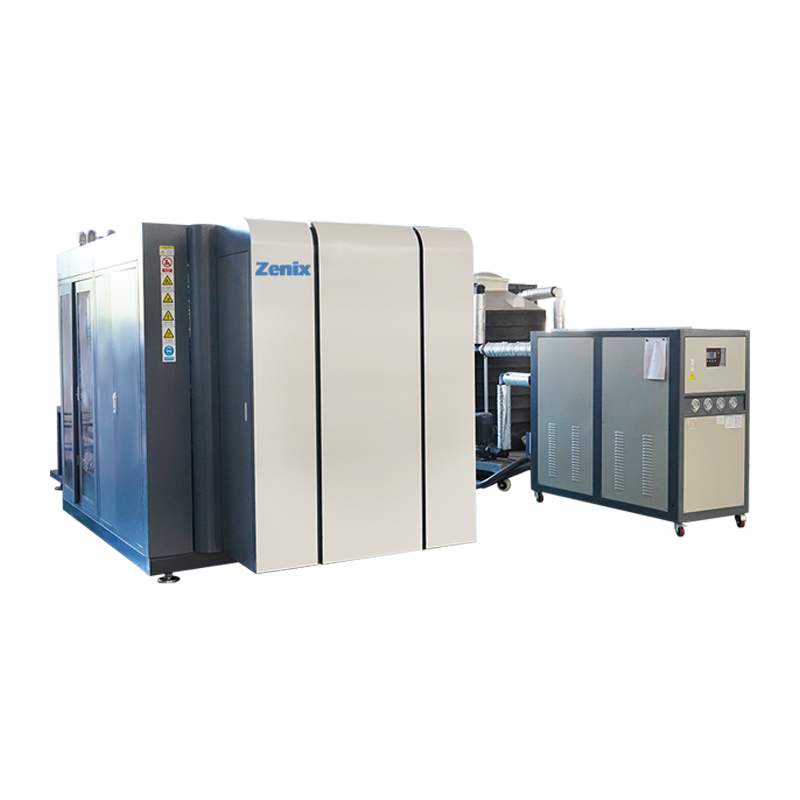
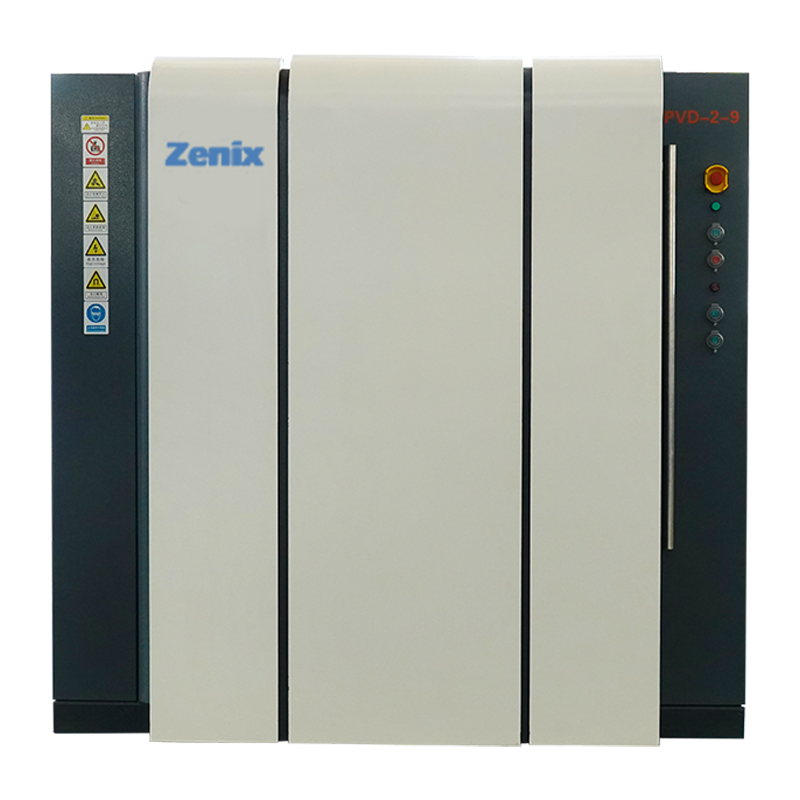
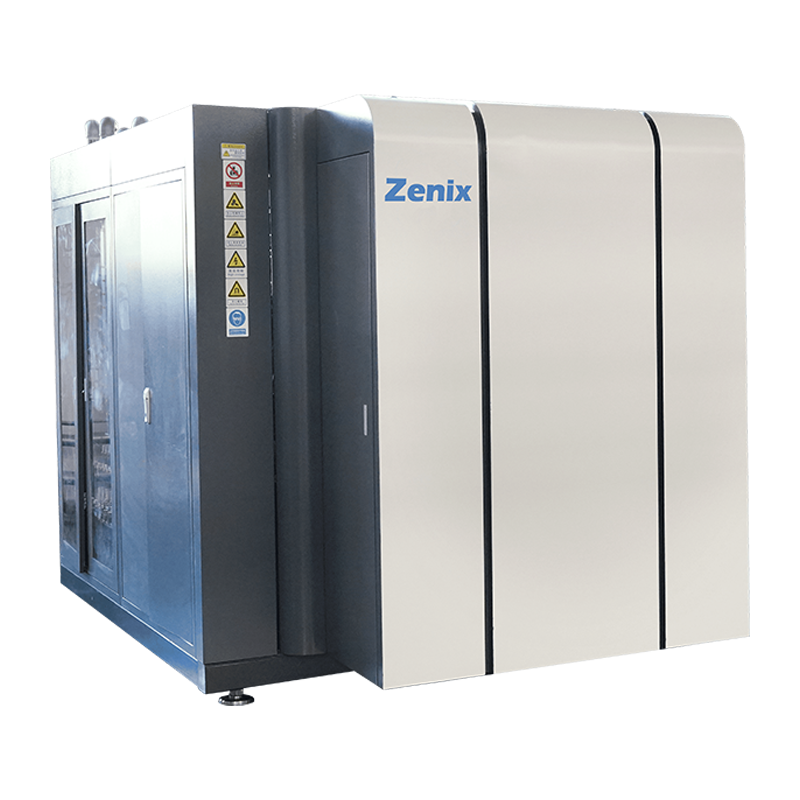
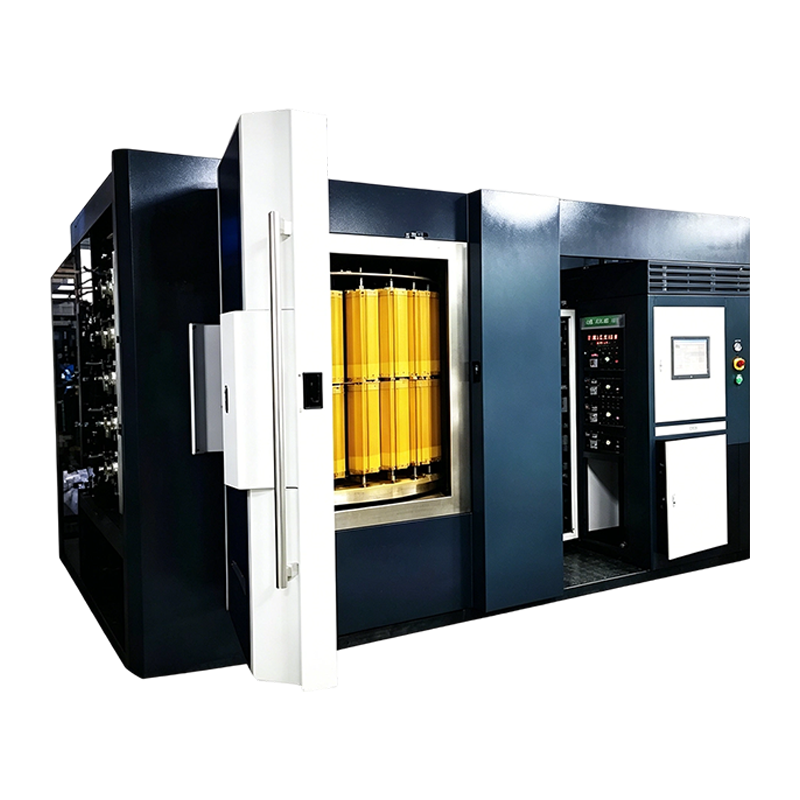
Budget-constrained lines have a third path: refurbished coating machines. Established builders such as Shanghai Zenix Vacuum Coating Technology Co., Ltd., a vacuum coating equipment manufacturer operating since 1985, supply both new systems and used coating machines, so a plant can pilot a PVD process on a second-hand chamber and scale into a new hard-coating or decorative line once volumes justify it.
Map every product family through three filters in order, substrate temperature, then geometry, then appearance, and the technology choice usually makes itself.
Work through five steps before signing any coating equipment contract. Each step either confirms the technology choice or kills it early, when changing course is still cheap.
CVD remains the standard for heavy-duty milling and turning inserts because its 6-14 micron coatings and diffusion-bonded interface handle high wear loads. PVD is preferred for sharp-edged tools and for carbide grades where toughness matters more than coating thickness.
No. PVD takes over sharp-edged, temperature-sensitive, decorative, and functional work, but CVD keeps clear advantages in thick, conformal coatings on carbide. Most established tool plants run both technologies side by side.
DLC is deposited with plasma-assisted CVD or PVD-arc hardware at 150-250 degrees C, so it behaves like a PVD option in practice: low temperature, thin films, and strong friction reduction for aluminum machining, engine components, and forming tools.
Plan for four to twelve weeks: fixture design, two or three trial batches, adhesion and wear validation, then a pilot run at production volume. Suppliers with established process libraries shorten that path because recipe transfer replaces exploration.

Product Categories
PVD Hard Coating Machine Decorative PVD Coating Machine Evaporation Coating Machine Functional Coating Machine Used Coating Machine Vacuum Pumps Pretreatment MachineContact Us
[email protected]
+86-15921261676
Room 101, Building 4, Songgang Smart Valley, No. 1699 Songhua Road, Qingpu District, Shanghai, China