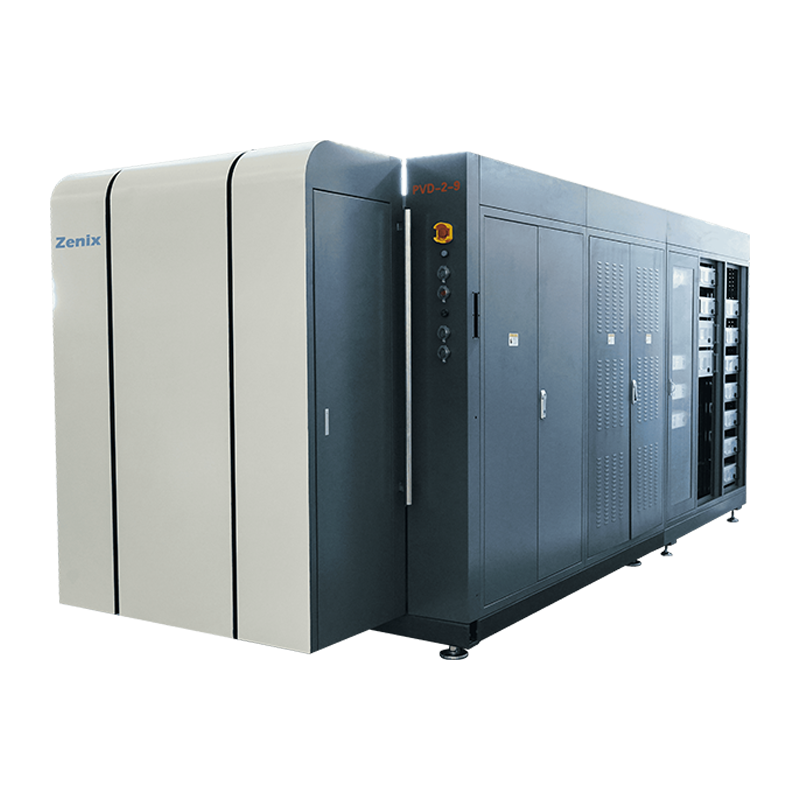
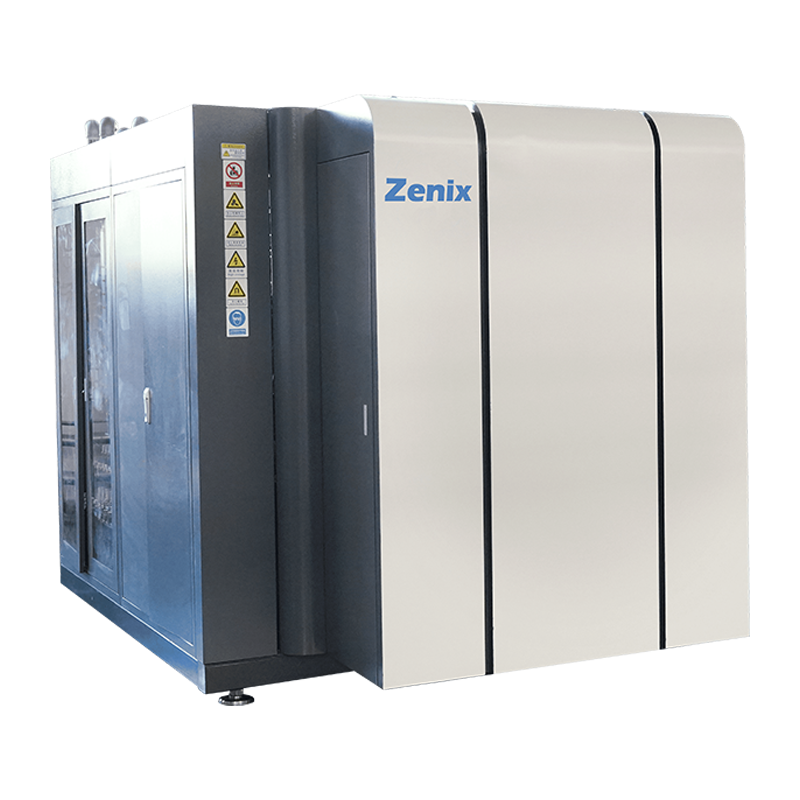
Technology
Home / Technology / Magnetron Sputtering

Magnetron Sputtering


High-Performance Vacuum Coating Systems

Principle:
In a vacuum chamber, gas ions generated by glow discharge (such as Ar⁺) are accelerated by an electric field to bombard a solid target material. The target atoms are ejected through this impact process and deposited onto the substrate to form a thin film. To improve efficiency, a magnetic field is applied behind the target to confine electrons near the target surface, greatly increasing the collision probability with gas molecules.


Characteristics:

  • Advantages: Low deposition temperature, uniform and dense coatings, wide range of coatable materials (including metals, alloys, ceramics, etc.), especially suitable for large-area coating applications. 
  • Disadvantages: Compared with cathodic arc deposition, the ionization rate is relatively lower (approximately 5%–10%), and the deposition rate is slower. 


Applications:

  • Optical Industry: Manufacturing AR anti-reflective coatings and low-emissivity glass. 
  • Electronics Industry: Fabrication of metal electrode layers and barrier layers for integrated circuits and hard disks. 
  • Mechanical Industry: Deposition of hard wear-resistant coatings such as CrN and DLC. 
  • Advanced Applications: High Power Impulse Magnetron Sputtering (HiPIMS) technology generates high-density plasma through ultra-high-power pulses, significantly improving coating quality, although low deposition efficiency remains a major challenge.